There was a time when an LED display on a wall meant one thing: information delivery. Flight schedules. Stock tickers. Menu boards. The screen existed to push a message at you, and the technology behind it was almost beside the point. As long as the text was legible and the colors were close enough, the job was done.
That era is over.
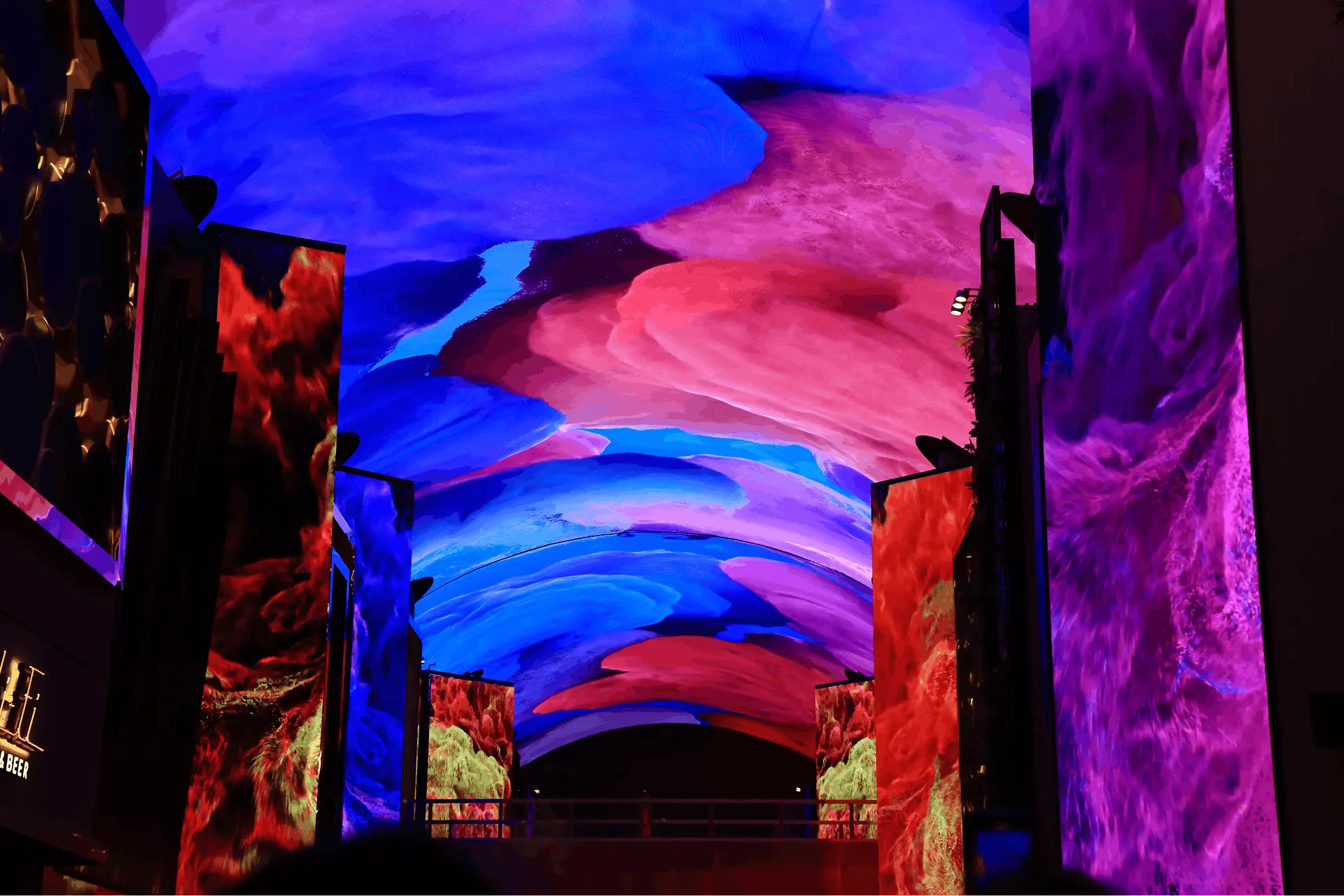
The most compelling spaces in the world, from luxury sales galleries to five-star hotel lobbies, museum installations to flagship retail environments, are no longer treating LED displays as signage. They are treating them as a medium. A canvas. A storytelling tool that shapes how people feel the moment they walk through the door.
And that shift changes everything about how we should be thinking about LED technology, who should be involved in the conversation, and what "success" actually looks like.
Signage was built for efficiency. Experiences are built for emotion.
The digital signage industry grew up solving a practical problem: how do you communicate information to a lot of people, quickly, without printing new materials every time something changes? It was a logistics solution dressed up in pixels.
That mindset shaped everything. The buying process centered on specs: pixel pitch, brightness, resolution, panel size. The content was an afterthought, often a rotating slideshow of branded graphics or a looping product reel. The technology was the product, and the content was filler.
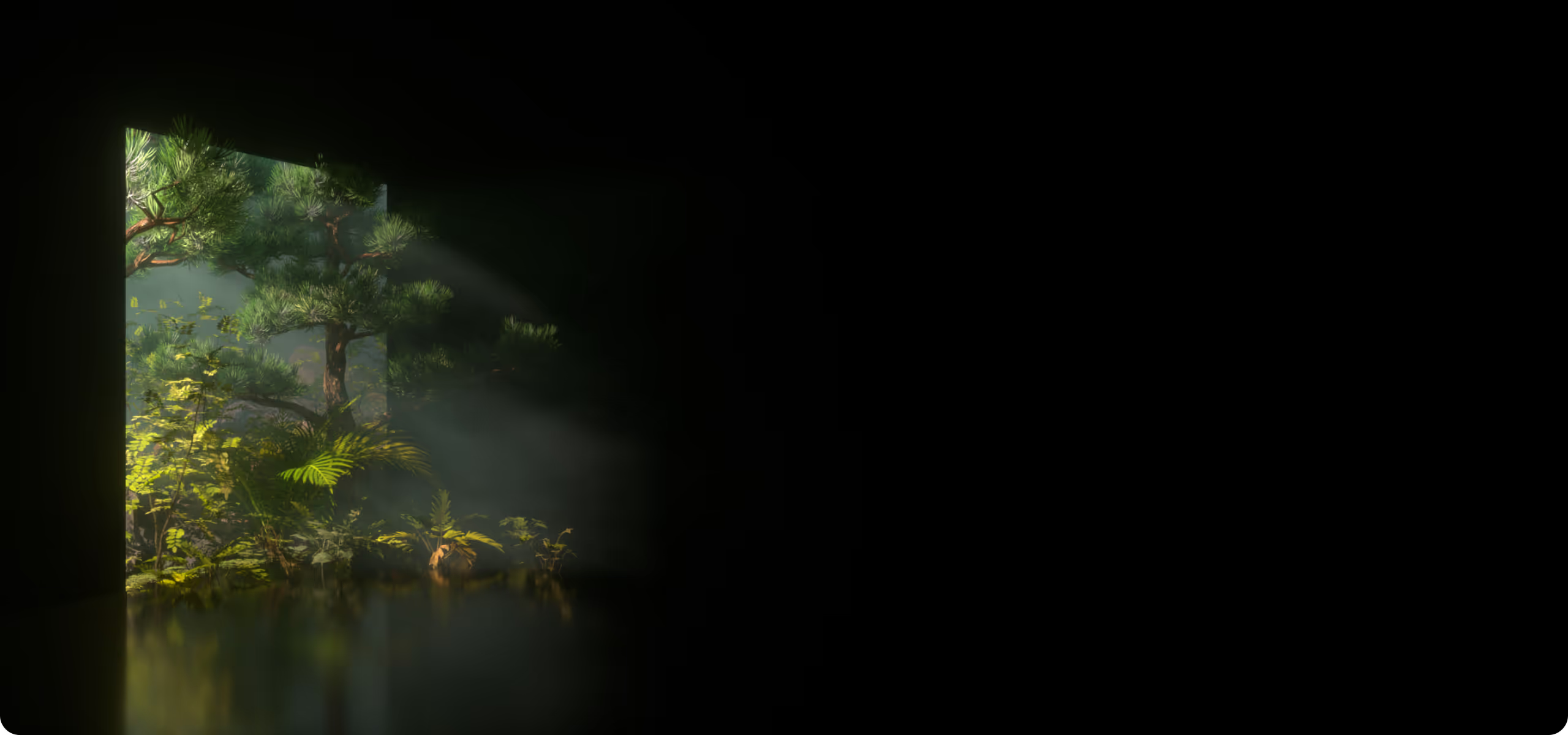
But something started to shift when designers, architects, and brand strategists realized that the same technology powering an airport departure board could also create a floor-to-ceiling ocean scene in a beachfront sales gallery. Or a living art installation in a museum atrium. Or a cinematic welcome moment in a hotel lobby that guests remember long after checkout.
The technology didn't change overnight. The ambition did.
The experience economy caught up to the screen.
We live in a world where people choose restaurants based on how photogenic the interior is. Where real estate developers compete not just on square footage but on the emotional narrative of a lifestyle. Where museum visitors expect to feel something, not just read a placard.
In that landscape, a screen on a wall doing nothing more than displaying a logo is a missed opportunity. It is dead space in an environment where every surface, every sightline, every sensory moment has the potential to tell a story and build a connection.
LED technology, particularly the advances in COB (Chip-on-Board) and fine-pitch displays, has matured to the point where the hardware can deliver cinematic image quality in nearly any environment, at nearly any scale. The barriers that once kept LED in the "signage" category (visible pixel grids, limited viewing angles, clunky installations) have largely dissolved.
What remains is a creative challenge, not a technical one: what story are you telling, and how does the space itself become part of the narrative?
Content is the experience. The display is the delivery system.
Here is where the industry conversation tends to go sideways. Too many projects still start with a hardware specification and then, weeks or months later, someone asks "so what are we going to put on it?"
That sequence is backwards.
When LED is treated as an experience medium rather than a signage tool, the content comes first. The story, the mood, the sensory impact you want to create in the space. The display technology is selected to serve that vision, not the other way around.
Think about it this way: no filmmaker chooses a camera before writing the script. No architect selects materials before understanding what the building needs to feel like. The creative intent drives the technical decisions. The same principle applies to immersive LED environments.
3D animation, CGI landscapes, forced-perspective illusions, curated digital art, branded visual narratives; these are the elements that turn a display into a destination. Without them, you have a very expensive screen showing a very forgettable slideshow.
The partnership model is changing, too.
In the signage era, the typical project involved a manufacturer, a systems integrator, maybe a content vendor, and a pile of coordination headaches. The client was left managing multiple relationships, bridging communication gaps, and hoping the final result matched the original vision.
The experience era demands something different. When the goal is a cohesive, immersive environment where hardware, content, software, and spatial design all work together seamlessly, the old multi-vendor model breaks down. The creative vision gets diluted across too many handoffs.
The companies leading this space are the ones that bring creative direction, technology expertise, and content production under one roof. A single partner who understands that the story and the screen are not separate conversations; they are the same conversation.
That integrated approach is not just more efficient. It produces better outcomes. The content is designed for the exact display it will live on. The display is specified for the exact experience it needs to deliver. Nothing is lost in translation.
What this means if you are planning an LED project.
If you are a developer designing a sales gallery, a hospitality brand refreshing your lobby, a museum planning an immersive exhibition, or a corporate team rethinking your flagship space, the question is no longer "what size screen do we need?"
The question is: what do we want people to feel when they walk into this room?
Start there, and the technology decisions become clearer. The pixel pitch, the display configuration, the mounting approach, the content format; all of it flows from the experience you are designing, not from a spec sheet.
A few things to consider as you plan:
- Lead with creative intent. Define the emotional and visual impact you want before selecting hardware. The best projects start with a mood board, not a product catalog.
- Think about content from day one. Budget for it, plan for it, and bring your content team into the conversation at the same time as your technology partner. Not after.
- Look for integrated partners. The companies that design, build, create content, and support the full experience under one roof will deliver more cohesive results than a patchwork of vendors.
- Consider the long game. A great LED experience is not a one-time installation. It is a living canvas that evolves with your brand, your programming, and your audience. Plan for content refreshes, seasonal updates, and creative evolution.
The screen is just the beginning.
The shift from signage to storytelling is not a trend. It is a fundamental change in how premium spaces use visual technology. The brands and institutions getting this right are the ones creating environments that people talk about, photograph, share, and remember.
LED technology has reached the point where the hardware is no longer the limiting factor. The image quality, the seamless integration, the scale; it is all there. The differentiator now is vision. It is the story you tell, the experience you create, and the partner who helps you bring it to life.
The screen on the wall is no longer the destination. It is the starting point.
Expand the experience.
Image: Steve Jangs / Shutterstock.com